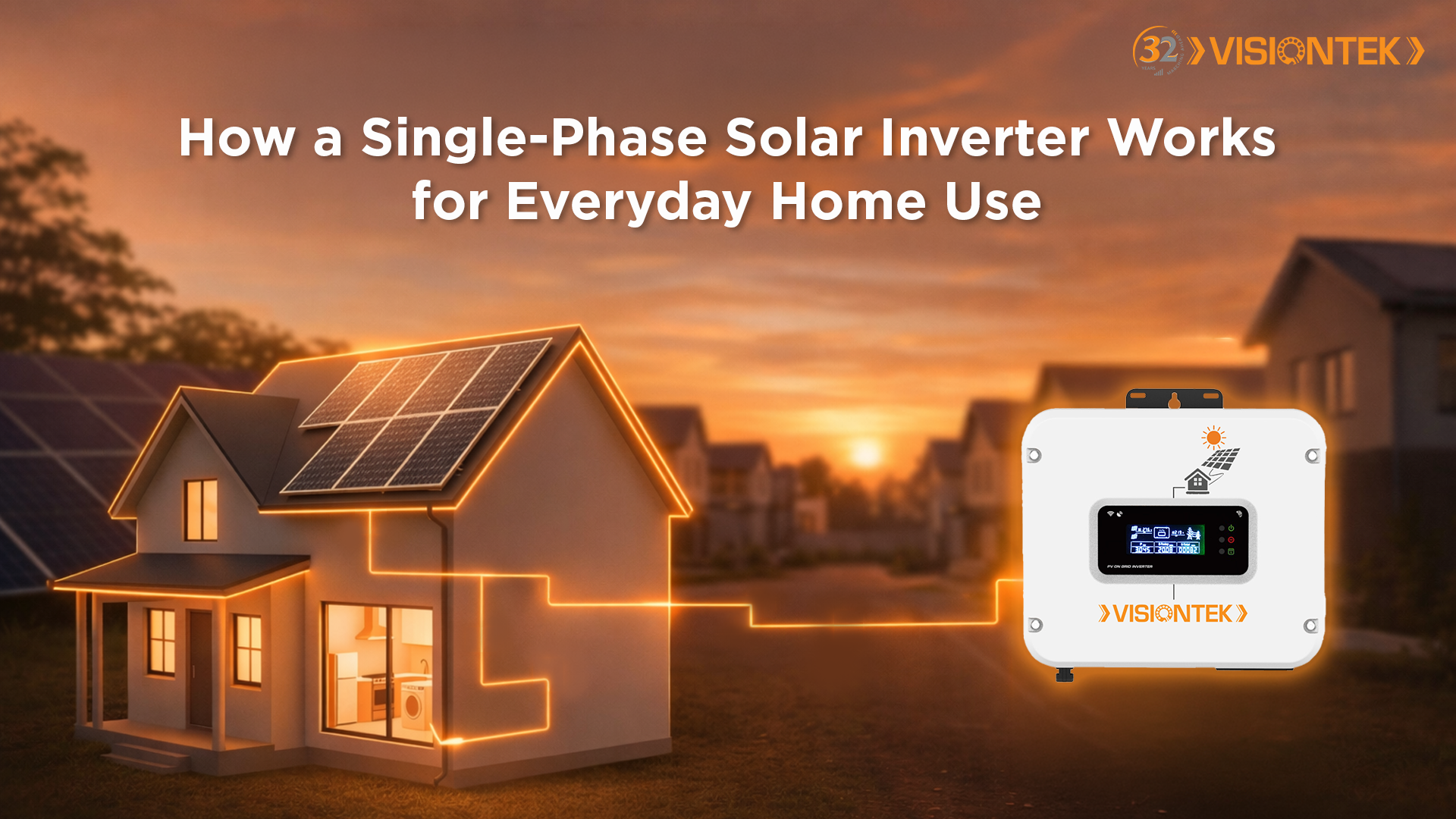
How a Single-Phase Solar Inverter Works for Everyday Home Use
Why Choose a Single-Phase Inverter in 2026 Rooftop solar has grown at a remarkable pace over the past few years, and a single-phase solar inverter sits right at the centre of it all. It takes direct current from the panels and turns it into alternating current. Lights come on. Fans spin. The fridge keeps running. Ordinary life turned extraordinary with the right power. The efficiency figures deserve a proper look. 98 per cent or higher, meaning almost all of that captured sunlight becomes genuinely useful power. Built-in apps push live output data straight to a phone, so performance stays visible and accessible throughout the day. Heat management has improved considerably too, keeping units steady and reliable through long summer afternoons when demand is at its peak. Worth pausing on that last point. A 1-phase inverter handles standard residential wiring with ease, fits most roof setups and comes together quickly for trained installation teams. The monitoring alone changes how households relate to their energy use. Checking solar output becomes something people actually enjoy, because the information is clear, immediate and genuinely satisfying to watch. Simple technology. Real results. Single-Phase Inverters for Smooth Everyday Power Homes need inverters that manage everyday loads smoothly. Units rated from 3kW to 5kW handle typical family needs such as lights, air conditioners, and refrigerators, with room to spare. Good models connect to the grid fast and hold voltage steady when sunlight varies. Many now leave space for future upgrades, while others focus purely on grid-tie work. The main goal remains steady with daytime supply, with very little interruption throughout the seasons. Good models lock onto the grid quickly and keep voltage stable when clouds pass over. Many options now include room for later upgrades. Some stay pure grid-tie while others add hybrid readiness. The focus stays on steady daytime output and minimal downtime across seasons. Types of Single-Phase Inverters Due to their reliance on the current supply, grid-tie systems predominate in residential solar. At night, single-phase on-grid inverters draw from the utility and send excess power outward. They suit areas with steady electricity access. Hybrid units open the door to batteries for evening use or outages. Pure off-grid inverters need large storage banks and work best far from towns. Most families pick on-grid setups for lower upfront cost and simpler wiring. A 5KW single phase solar inverter handles heavier loads comfortably. It powers multiple rooms during bright hours and reduces grid draw significantly. How to Choose the Best Single-Phase Inverter in 2026 Begin with monthly electricity bills to estimate the required capacity. Add up appliance ratings, then allow some headroom for future needs. Check that the inverter works across a wide temperature range and pairs with common panel types. Look for clear displays, WiFi links and quiet fans. Strong local support matters when service calls arise. A single-phase hybrid inverter makes sense if storage sits on the wishlist. Always confirm the model meets the area grid rules for safe connection. Prices shift with size and extras. Basic 3kW on-grid units stay within reach for starter systems. Hybrid versions cost more because of added circuits. Installation remains straightforward for trained teams, and incentives can trim the final amount. Over time, bill savings repay the investment within a few years for active households. Conclusion A solid single-phase inverter brings noticeable relief to power bills in 2026. These units balance cost efficiency and modern touches such as app access and quiet fans. Homes gain steady daytime energy and a smaller carbon footprint without heavy upfront spending. Brands build trust through consistent performance and service reach. Visiontek’s line of Single Phase Grid-Tie Inverters (V01G03K0, V01G05K0, V01G03K3, and V01G05K2) is geared toward residential applications. Visiontek units come with eight to ten years of warranty. The H6 Transformerless Topology reduces losses and enhances power conversion. An Advanced Aluminium Heat Sink spreads heat evenly for steady running. Higher temperature efficiency lets the units operate from minus twenty-five degrees to plus sixty degrees Celsius. A Graphical LCD Display shows live data and system health at a glance. The Smart Cooling System stays under twenty-five decibels, so noise stays minimal. Remote checks arrive through WiFi, GPRS or RS485 links. Check Visiontek’s range to find the right fit and start turning sunlight into savings with confidence. Frequently Asked Questions. Are single-phase inverters good for home use? Yes, they match standard house wiring and deliver clean power without major changes to the electrical board. What size single-phase inverter do I need? Three to five kilowatts works for most families. A 5KW single phase solar inverter manages typical cooling, lighting and appliance demands comfortably. What is the lifespan of a single-phase inverter? Well-built models run ten to fifteen years when kept clean and ventilated properly. How does remote monitoring help with a single-phase solar inverter? Phone alerts and daily reports show output trends and flag any drop in performance early.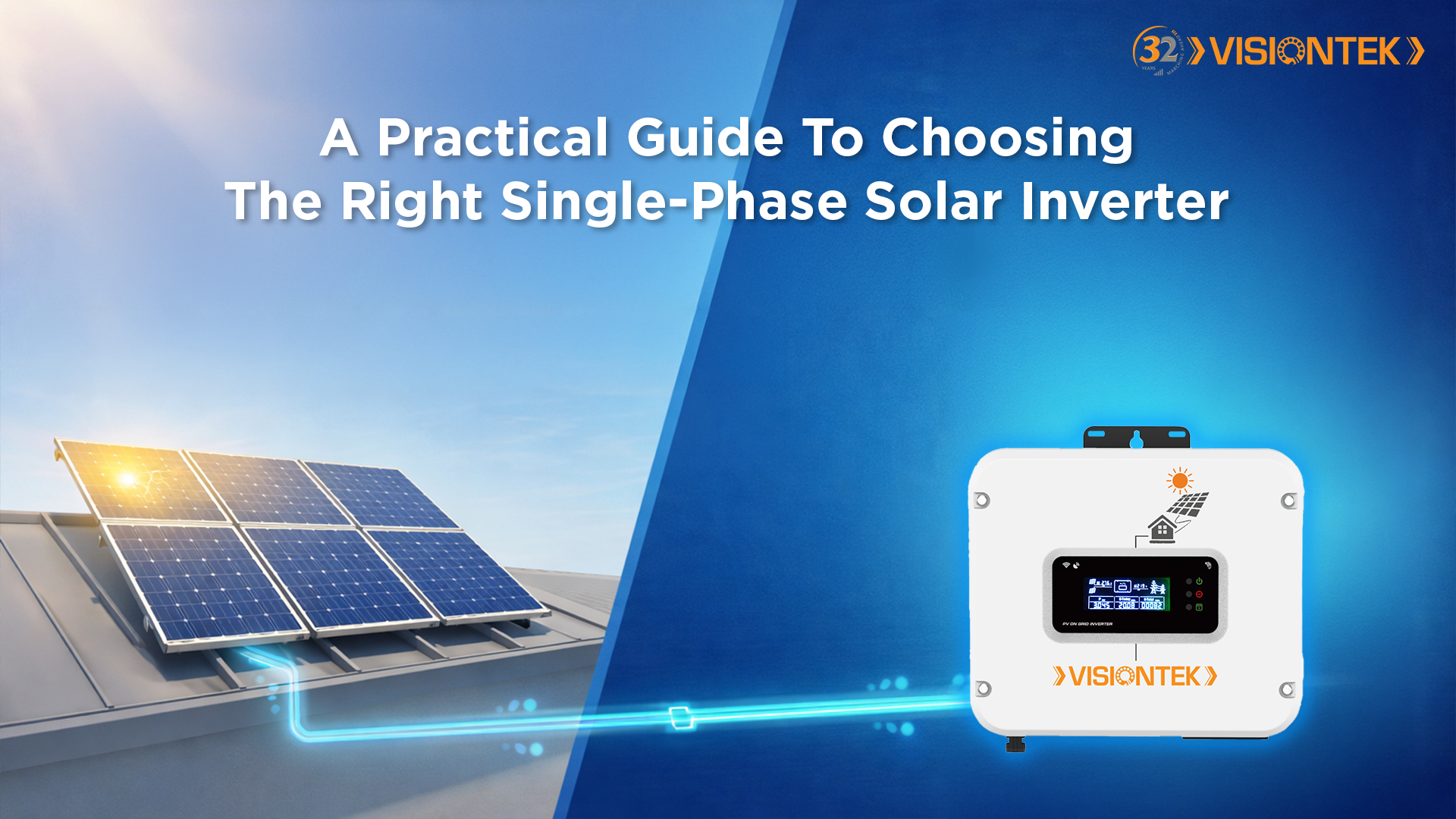
A Practical Guide To Choosing The Right Single-Phase Solar Inverter
Solar panels generate power in one form. Your home runs on another. The inverter handles that change so your appliances can run on solar. It also adjusts output through the day as sunlight changes. This keeps the power supply stable and helps you track how much energy the system is producing. Choosing the right unit matters because of this. A good match makes daily usage smoother and keeps the system easier to manage over time. For most residential setups, a solar single phase inverter fits naturally into that requirement. A Natural Match For Residential Rooftops Single-phase systems suit a large share of homes because residential connections usually operate on single-phase supply. This makes selection and integration more straightforward during planning and installation. Visiontek’s single-phase range runs from 2.2 kW to 6 kW. That covers most home setups. For a typical mid-sized home, a 6KW single phase solar inverter is usually enough for daily use. It supports regular usage and allows some room for higher consumption if needed. That balance becomes useful when energy usage increases slightly over time. What Makes It Useful Every Day A good inverter adds value in ways that homeowners feel quickly. The benefits usually show up in three areas: Better conversion of solar energy into usable household power Smoother response when sunlight intensity shifts across the day Easier monitoring through display, app or portal access This matters because solar works best when generation and usage stay closely aligned. An inverter acts like the system’s control centre, helping manage that relationship with more precision. Features That Support Better Performance When comparing products, it helps to look beyond the headline wattage and examine the working features that shape long-term usability. Core Features To Look For High conversion efficiency for stronger energy utilisation Smart monitoring for quick access to performance data Communication options that support connected system management Protective functions for safer operation in varying grid conditions Rugged construction suited to rooftop environments VisionTek highlights features such as a large LCD display, remote settings through app and web portal, Wi-Fi and other communication options, IP65 protection and anti-islanding support. Together, these make a single phase grid tie inverter more appealing for households that value both visibility and reliability. Understanding Value Beyond The Upfront Cost Price always enters the conversation, yet purchase value comes from a broader view. The single phase solar inverter price should be considered alongside efficiency, service support, ease of monitoring and suitability for the home’s expected load. A lower entry cost may feel attractive during the first conversation. A stronger fit often creates better value over the years through smoother operation, more useful monitoring and stronger alignment with the rooftop system. For many buyers, that is where the real return begins. How To Choose The Right One Selection becomes simpler when homeowners use a practical checklist. A Simple Selection Framework System Size Match the inverter to the solar array and the home’s energy pattern. Usage Pattern Consider daytime consumption, appliance mix and seasonal changes in demand. Monitoring Preference Many homeowners appreciate app-based visibility because it keeps performance easy to track. Protection Features Look for surge protection, environmental sealing and stable grid support. Future Readiness Choose a capacity and feature set that support the next stage of household energy use. A homeowner searching for the best single phase solar inverter usually benefits most from this kind of grounded comparison rather than a quick spec-sheet scan. Why It Makes Sense For Modern Homes A modern home depends on steady access to electricity across multiple devices and routines. Solar can cut down how much power you take from the grid. The inverter is what keeps the supply steady during the day. When the system is set up well, the experience feels simple. Power flows where it is needed, performance stays visible and the setup responds without constant intervention. That is where the right inverter choice starts to show its value. If you are setting up a system or replacing an older one, Visiontek’s single-phase range is built for regular home use and easy handling. FAQ What Does A Single-Phase Solar Inverter Do? It changes the electricity from solar panels into power your home can use. Who Should Choose A Single-Phase Inverter? Homes with single-phase electrical connections and typical residential energy needs usually find this type well suited to their setup. Why Is Monitoring Important In A Solar System? Monitoring helps homeowners track generation, usage trends and overall system health through the day. How Does Capacity Selection Work? It depends on how much power your system produces and how much your home uses during the day.