
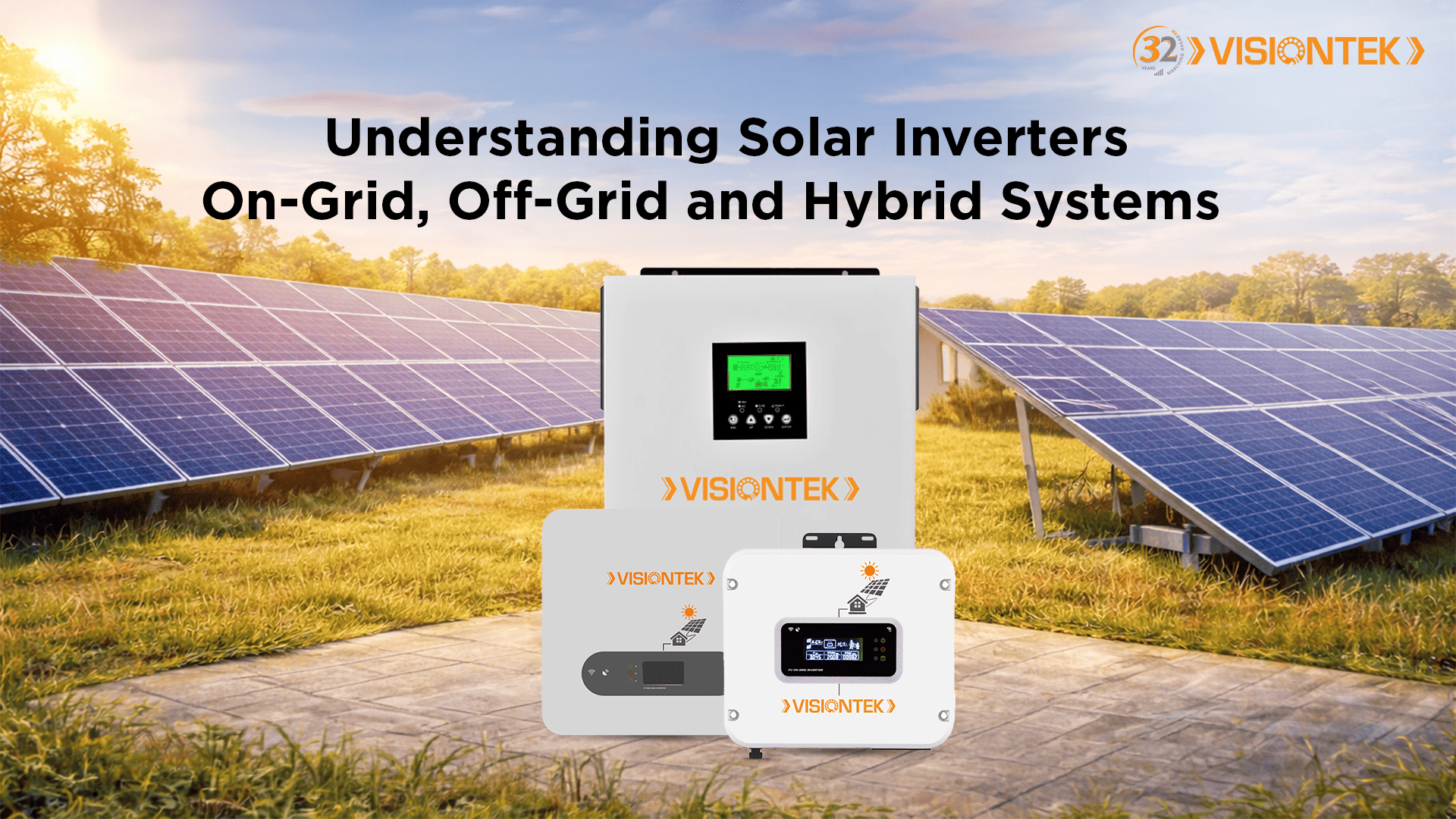
Understanding Solar Inverters: On-Grid, Off-Grid and Hybrid Systems
Quick Overview
Solar power systems depend on inverters to handle energy conversion and distribution effectively. Solar inverters on & off grid help manage power flow in different situations. Grid-tied solar inverter units support bill reduction through grid interaction in areas with a stable supply. Off-grid solar inverters deliver standalone operation in remote spots. Hybrid solar inverter solutions provide backup along with grid connectivity. Visiontek stands out in solar inverters with practical designs suited to varied Indian conditions.
Specification Table Of Contents
- What Is A Solar Inverter
- Features of Grid-Tie Solar Inverter
- How Off-Grid Solar Inverters Work
- Advantages Of Hybrid Solar Inverter
- Comparison Between Solar Inverters On & Off-Grid Options
- Spotlight On Visiontek In Solar Inverters
- Conclusion
What Is A Solar Inverte
A solar inverter acts as the main control unit in solar power installations. It transforms electricity from panels and directs flow between panels, batteries, and the grid connection when present. The device makes sure power reaches standard appliances safely and supports smooth system performance. Quality solar inverters improve energy utilisation and contribute to reliable daily operation.
Features of Grid-Tie Solar Inverter
Grid-tie solar inverter units link directly to the utility network. They align solar production with grid electricity and allow surplus energy to flow back for net metering benefits.
These inverters keep setups simpler by reducing the need for extensive battery storage. Installation stays straightforward and matches well with urban or semi-urban locations that enjoy consistent grid access. Users gain from lower electricity costs as the system operates automatically when sunlight is available.
Grid-tie solar inverter models include safety mechanisms that halt operation during grid outages to protect line workers. This results in no power supply to the premises when the grid is down. Such inverters suit environments where power cuts occur infrequently, and savings remain the primary aim.
How Off-Grid Solar Inverters Work
Off-grid solar inverters work independently without any connection to the main grid. They take power straight from solar panels and use batteries to store extra energy for use when the sun is not shining.
The solar panels first produce direct current electricity from sunlight. A charge controller then safely directs this power to the battery bank to keep it charged properly. When electricity is needed in the home, the off-grid solar inverters pull energy from the batteries and change it into alternating current that household appliances can use.
This conversion happens smoothly inside the inverter, so lights, fans and other devices run without any problem. During sunny hours, any extra power goes into the batteries for later use. At night or on cloudy days, the stored battery power keeps the supply going without interruption.
Off-grid solar inverters include safety features to protect the system from overload or low battery conditions. The complete setup gives full control over power generation and use, making it perfect for places far away from grid lines.
Advantages Of Hybrid Solar Inverter
Hybrid solar inverter solutions merge the capabilities of grid-connected and standalone systems into one device. They maintain a grid connection for routine use, export surplus power when advantageous, and shift to battery support automatically in case of outages. Users store excess solar generation or feed it to the grid according to prevailing rates and needs.
The arrangement enhances self-consumption and ensures critical loads continue without interruption during supply failures. Many units come with monitoring tools that display live information on generation usage and battery levels via apps or screens.
Hybrid solar inverter models offer versatile operation and adapt to changing conditions throughout the day. They support efficient routing of energy across available sources for improved overall results.
Comparison Between Solar Inverters On & Off-Grid Options
Cost
Grid-tie solar inverter options usually involve a lower initial investment. Standalone systems add expense through battery requirements. Hybrid solar inverter solutions carry higher costs due to combined features and intelligent controls.
Efficiency
Grid-connected setups deliver strong performance with steady grid availability. Standalone results depend heavily on battery quality and maintenance. Hybrid solar inverter units balance efficiency by managing power intelligently between sources.
Installation
Grid-tie solar inverter models need minimal additional components and basic wiring. Standalone and hybrid units require battery linkages, which increase setup effort and attention to detail. Expert installation supports safe and optimal functioning in all configurations.
Use Cases
Grid-tie solar inverter choices fit locations with reliable utility access. Standalone inverters serve isolated areas without grid presence. Hybrid solar inverter options appeal where both cost savings and supply security matter.
Visiontek develops solar inverters tailored for Indian voltage fluctuations and climate variations. Their range includes surge protection, wide input tolerance and compatibility with common single-phase or three-phase connections.
Spotlight On Visiontek In Solar Inverter
Visiontek delivers revolutionary solar inverters with cutting-edge technology and unmatched performance backed by a 30-year legacy. The lineup in solar inverters covers grid tie solar inverter off grid solar inverters, and hybrid solar inverter models crafted to address diverse energy demands across India.
Products emphasise robust build, efficient working and user-friendly operation. Key elements include durable enclosures, advanced monitoring capabilities and effective battery handling where required. Visiontek solar inverters manage everyday challenges like voltage swings and elevated temperatures while providing steady output. The brand focuses on long-lasting reliability and seamless pairing with different solar panels and battery systems found in the market.
Conclusion
Solar inverters on & off-grid selections shape how effectively a solar system supplies power and creates value over the years of service. Grid-tie solar inverter models support bill savings via grid links and net metering. Off-grid solar inverters enable full independence from utility networks. Hybrid solar inverter solutions balance both with added backup and export flexibility.
Location, energy usage habits and budget guide the appropriate pick. Visiontek provides dependable solar inverters with contemporary features designed for Indian homes and small businesses. Solid awareness of the available types helps create a solar arrangement that fits particular needs and ensures a consistent energy supply moving forward.
FAQs
What sets grid-tie solar inverters apart from off-grid solar inverters?
Grid-tie solar inverters connect to the utility network and enable net metering benefits, while off-grid solar inverters run fully independently with batteries and maintain no grid connection.
How does a hybrid solar inverter handle situations during power outages?
Hybrid solar inverter senses grid disruption and shifts to battery-stored energy without delay, so essential appliances continue operating smoothly.
Why consider a hybrid solar inverter for varied power needs?
A hybrid solar inverter combines grid interaction with backup storage, which supports both daily savings and protection against unexpected supply interruptions in one unit.
What makes Visiontek stand out in solar inverters?
Visiontek offers solar inverters with reliable technology, wide compatibility and strong performance suited to Indian conditions, along with a long-established reputation for quality.