
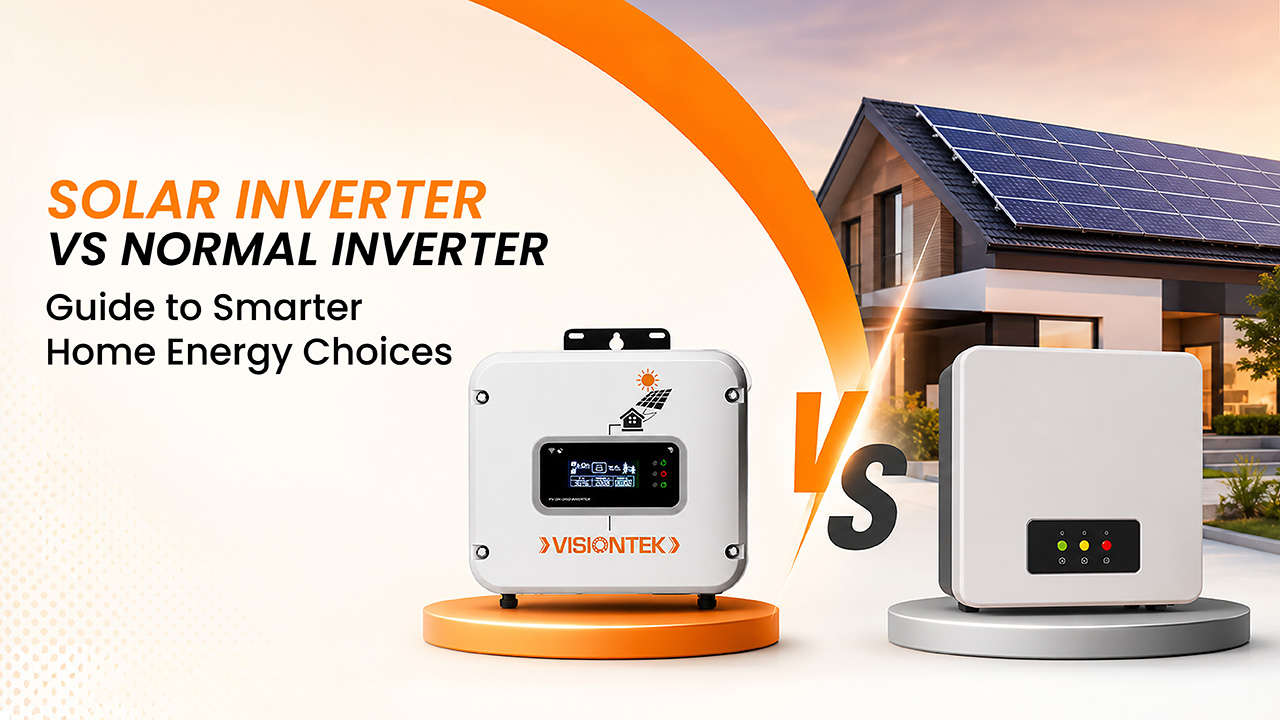
Solar Inverter vs Normal Inverter: A Practical Guide to Smarter Home Energy
Two paths with one goal to offer reliable power at home. Choosing the right backup solution shapes monthly electricity costs, resilience during power cuts, and long-term environmental impact. Solar inverters, part of a wider Solar Power System, sit on one side. Normal inverters, running on grid-charged batteries, sit on the other. Both keep appliances running. Each follows a different path to sourcing and managing power. This Solar Inverter vs Normal Inverter comparison sets out the key differences clearly.
How a Solar Power System Generates Electricity
Sunlight in, electricity out. A Solar Power System pairs photovoltaic panels with an inverter to make that conversion possible for everyday home use. The process breaks down into a few clear stages:
- Solar panels capture sunlight and generate direct current (DC) electricity.
- The inverter converts that DC power into alternating current (AC), the form used by household appliances.
- Charge controllers manage the flow of energy, protecting the battery bank from overcharging. Two common types exist. MPPT (Maximum Power Point Tracking) controllers improve efficiency by continuously optimising the power drawn from the panels. PWM (Pulse Width Modulation) controllers offer a simpler, more budget-friendly alternative, with steady, dependable performance.
- Surplus energy gets stored in batteries, ready for use after sunset or on cloudy days.
A cycle forms. Panels generate power throughout daylight hours, the inverter processes it as needed, and any extra energy is banked for later use.
Key Differences Between Solar and Normal Inverters
Same job, different methods. The two technologies diverge across several practical dimensions.
- Energy source. Solar inverters run on power from solar panels, a renewable source. Normal inverters rely on batteries charged through the grid.
- Primary role. Solar inverters focus on everyday power generation and lower bills. Normal inverters focus mainly on emergency backup during outages.
- Installation. Solar systems involve panel setup and dedicated wiring. This takes time and planning. Normal inverters are simpler to install, closer to plug-and-use.
- Space. Solar panels need roof or open outdoor space to perform well. Normal inverters fit into a small indoor spot.
- Cost. Solar systems carry a higher upfront investment, offset over time through lower electricity bills. Normal inverters cost less to start.
- Environmental impact. Solar inverters reduce carbon footprint and grid reliance. Normal inverters remain tied to the existing grid supply.
- Weather. Solar inverter output shifts with the amount of available sunlight. Normal inverters perform consistently across all conditions.
One generates. One backs up. That distinction, more than any other, defines the choice between the two.
Financial and Environmental Benefits of Solar Inverters
Sunlight is free. That simple fact drives most of the appeal behind solar inverters, and the case for choosing one rests on three main points.
- Lower electricity bills. Daytime power comes directly from sunlight rather than the grid, leading to meaningful savings over time.
- A smaller carbon footprint. Consistent use of a Solar Power System lowers reliance on fossil-fuel-generated grid electricity.
- Greater energy independence. During grid disruptions, a well-sized solar system with battery storage keeps essential appliances running.
Placement matters. These benefits grow stronger with a quality solar panel installation, since panel positioning and wiring directly affect how much energy the system captures and how efficiently that energy gets used.
The Case for Normal Inverters
Simplicity has its own value. Normal inverters remain a strong choice for households favouring straightforward setup and immediate reliability.
- Fast response. Normal inverters switch on almost instantly when grid power fails, keeping essential appliances powered through the interruption.
- Simple installation and maintenance. A straightforward setup, free of panels, roof work or weather-dependent output.
- Consistent performance. Cloud cover and shorter winter days leave output unaffected.
- Small footprint. An easy fit indoors, well suited to homes with limited roof or outdoor space.
Backup, plain and simple. For households mainly seeking dependable power during outages, rather than a long-term generation strategy, a normal inverter often proves the more practical and cost-effective pick.
Choosing the Best Solar Inverter for Home Use
The decision starts with numbers. Daily energy consumption and peak demand periods indicate the capacity required, and a few other factors shape the final choice.
- Energy consumption patterns. Daily usage and peak demand periods indicate the capacity required.
- Compatibility. Voltage and current ratings should align with the existing electrical setup, alongside relevant industry certifications.
- Budget, including long-term costs. Solar systems carry higher upfront costs, including panels and installation, though savings tend to build over time. Normal inverters cost less initially, with bills remaining unchanged.
- Available space. A solar panel installation requires adequate roof or open space. A normal inverter fits into a small indoor spot.
- Installation quality. Professional installation matters for either option. Correct wiring, safe component placement and optimal panel positioning all shape performance and safety.
Maintaining Efficiency and Performance
Small habits, lasting results. Regular upkeep keeps either system performing at its best.
- Seasonal inspections catch minor issues early.
- Cleaning solar panels periodically clears dust buildup and supports steady output.
- Good ventilation around inverter units guards against overheating.
- Monitoring tools track output and highlight when adjustments are due.
Final Thoughts
Priorities decide the outcome. Long-term savings, sustainability and energy independence favour a Solar Power System, backed by quality solar panel installation, as a strong long-term investment. Fast, reliable backup with minimal setup favours a normal inverter, offering dependable performance at a lower starting cost.
Reputation counts too. Brands such as Visiontek offer inverter solutions suited to both standalone backup setups and broader Solar Power System configurations, making these options worth a look during the evaluation process.
Frequently Asked Questions
What is the main difference between a solar inverter and a normal inverter?
A solar inverter draws energy from solar panels, while a normal inverter relies on batteries charged through the electrical grid.
How does solar panel installation affect system performance?
Installation quality shapes system capacity and alignment with available sunlight. Professional installation supports maximum energy output and long-term reliability.
Which efficiency ratings matter most when evaluating a Solar Power System? Real-world figures tell the fuller story. Weighted efficiency ratings reflect real-world performance rather than ideal lab conditions, making these figures a useful benchmark when identifying the best solar inverter for home use.
Why do buyers favour brands like Visiontek for home inverters?
Consistency builds trust. Visiontek is recognised for reliable, well-integrated inverter designs suited to both backup and Solar Power System applications.